About ARBR
Understanding our mission, framework, and the battery recycling ecosystem
Our Story
The Alliance for Responsible Battery Recycling (ARBR) is the Producer Responsibility Organization (PRO) for the battery sector under the government's Extended Producer Responsibility (EPR) program. Registered with the Corporate Affairs Commission and the Ministry of Justice in 2019, ARBR is responsible for ensuring proper battery waste management in line with the National Policy on Battery Waste Management 2022 and the National Environmental (Battery Control) Regulations 2024.
ARBR serves as a coordinating body that brings together battery producers, importers, distributors, retailers, recyclers, collectors, renewable energy operators, and other stakeholders to ensure shared responsibility for the management of batteries at end of life.
ARBR operates within Nigeria's regulatory framework for environmental protection, working closely with the Federal Ministry of Environment, NESREA, State Environmental Protection Agencies, and other relevant institutions.
Our Mandate
To promote compliance, improve industry standards, reduce environmental and health risks associated with improper battery recycling, and support the transition to a more sustainable and circular battery value chain.
Our Mission
To promote safe, responsible, and sustainable management of waste batteries in Nigeria by ensuring shared responsibility among producers, importers, retailers, recyclers, and consumers for end-of-life battery management.
Our Values
Sustainability, transparency, and environmental stewardship
What We Do
1. Coordination of the Battery Value-chain
We ensure shared responsibility within the battery value-chain including Producers, Importers, Distributors, Retailers, Consumers, Collectors, and Recyclers for the environmentally sound management of waste batteries. This covers the full lifecycle of batteries, from collection and safe storage to transportation, recycling, and final disposal, in line with national regulations and global best practices.
2. Used Battery Take-Back & Recycling Programmes
We coordinate and support national battery take-back and recycling programmes aimed at diverting used batteries from unsafe informal channels. These programmes ensure that collected batteries are channeled to registered and compliant recycling facilities that meet regulatory and environmental standards, thereby reducing environmental pollution and associated health risks.
3. Policy Engagement & Regulatory Support
We work closely with government institutions, regulators, and relevant stakeholders to support the development, implementation, and enforcement of policies and regulations governing battery management in Nigeria. Through technical input, stakeholder consultations, and continuous engagement, ARBR contributes to strengthening regulatory frameworks, improving compliance, and promoting responsible practices across the battery recycling value chain.
4. Stakeholder Engagement & Awareness Raising
We conduct nationwide awareness campaigns, workshops, and stakeholder forums to educate industry players and the general public on responsible battery handling and disposal. These engagements highlight the environmental and public health risks associated with improper battery recycling, while promoting the benefits of formal collection systems and environmentally sound recycling practices.
5. Capacity Building & Partnerships
Through strategic partnerships with regulatory authorities, NGOs, and development partners, ARBR supports capacity building across the battery value chain. This includes targeted training programmes, technical support, and the promotion of safer work practices that improve occupational health, protect the environment, and support sustainable livelihoods.
Why Responsible Battery Management Matters
Improper recycling and disposal of used batteries can contaminate soil and water, expose communities to lead and other toxic substances, and pose serious risks to human health - particularly in informal settings where safety controls are limited.
- Safer handling, storage, and transportation of used batteries
- Reduced exposure to lead and other hazardous substances
- Improved occupational health and safety practices for collectors and recyclers
- Protection of soil, water, and surrounding communities
Our Members
ARBR's membership includes battery Producers and Importers, Recyclers, Collectors, Renewable Energy companies, Corporate waste battery generators, and Affiliate organisations. Membership ensures access to compliant recycling pathways, regulatory guidance, and participation in a coordinated national approach to waste battery management.
Get Involved
Whether you are a battery Producer, Importer, Distributor, Retailer, Recycler, Collector, Corporate Waste Battery Generator, or Civil Society Partner, there is a role for you to play in advancing responsible battery management in Nigeria. ARBR provides a platform for collaboration, compliance, and collective impact.
Get In TouchOur Team in Action
Showcasing our field inspections and community engagement in distributing personal protective equipment to recyclers across Nigeria.
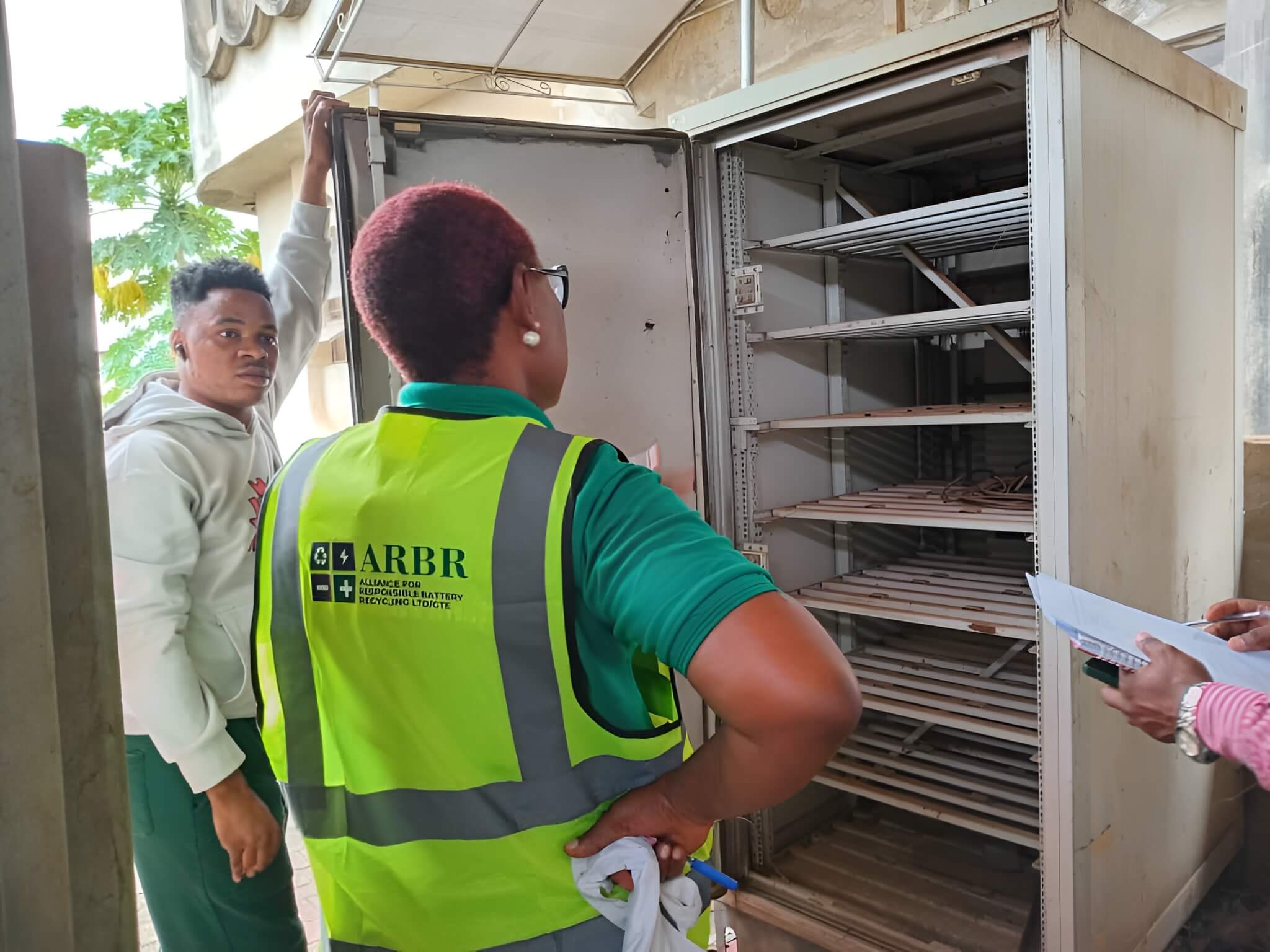
Battery Inspection Exercise
ARBR team conducting an on-site inspection to assess battery handling, storage practices, and environmental compliance.
Partnerships & Collaborations
ARBR works in close collaboration with government institutions, regulatory agencies, civil society organisations, industry associations, and development partners to strengthen waste battery management in Nigeria.
- Policy development and regulatory implementation
- Nationwide sensitisation and stakeholder engagement
- Capacity building and training initiatives
- Pilot projects and innovative recycling solutions
Through collaboration, ARBR leverages collective expertise and resources to drive systemic improvements across the battery value chain.
Resources & Knowledge Hub
ARBR serves as a knowledge platform for responsible battery management in Nigeria. Through its resources, members and stakeholders can access information to support compliance, best practices, and informed decision-making.
- Relevant policies, regulations, and guidelines
- Technical notes and guidance documents
- Updates on industry developments and initiatives
- Awareness and sensitisation materials
- Frequently Asked Questions (FAQs)